Accessibility and Autonomy in Learning 🧩
Study of the 3D Manufacturing Process Adapted for Students with Visual Impairments
Author: Lorena Bocos Olabarría
Date: September 2025
Supervised by: Iñigo López Gazpio & Elsa Fernández Gómez de Segura
🧠 Description
This project is part of the Bachelor’s Thesis in Computer Engineering and aims to enhance accessibility and autonomy in learning through the use of 3D modeling and printing technologies.
In collaboration with the IBT-CRI Donostia support service, a study was conducted on the design, manufacturing, and evaluation of three-dimensional pieces adapted for students with visual impairments or blindness, to facilitate tactile understanding and learning in the classroom.
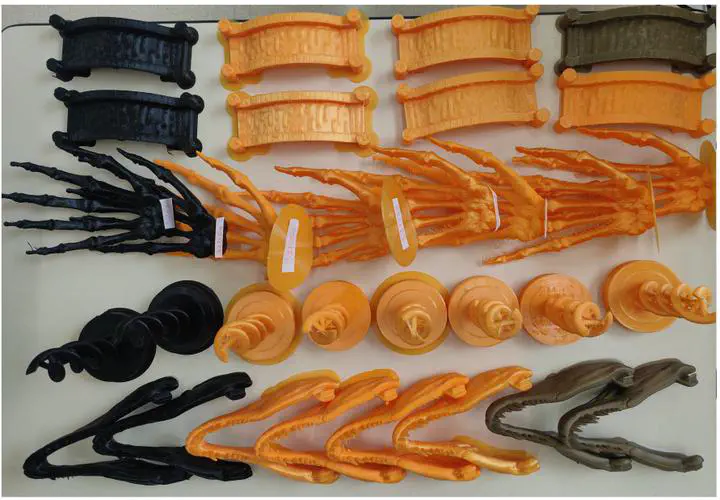
The work combines an educational, engineering, and artistic approach, integrating 3D printing optimization practices with the design of inclusive and sustainable educational resources, including anatomical models and figures inspired by Basque mythology.
🎯 Project Objectives
- Promote educational inclusion through the use of 3D technologies.
- Design and manufacture tactile teaching materials adapted for students with low vision.
- Optimize 3D printing parameters to improve durability and reduce material consumption.
- Develop an open-source 3D repository of reusable educational resources.
- Encourage autonomy, accessibility, and sustainability in learning.
🧩 Technologies Used
- Blender – 3D modeling of pieces and figures.
- UltiMaker Cura – Print configuration and optimization.
- FDM 3D Printers (PLA) – Manufacturing of physical models.
- Python / Excel – Statistical analysis of impact and resistance tests.
- GitHub / Google Drive – Version control and shared repository management.
🧱 Results and Contributions
- Creation of over 30 educational 3D models adapted to various levels (from preschool to high school).
- Evaluation of 14 infill patterns and different print densities to identify the most durable configurations.
- Construction of an open-access repository (CC BY) compiling the designed pieces and experimental results.
- Direct collaboration with the IBT-CRI Donostia service, which will receive the printed pieces for classroom use.
🔬 Examples of Designed Pieces
- Low poly and high poly anatomical models (male, female, and mythological “lamia”).
- Tactile educational figures for science and biology.
- Educational prototypes adapted for inclusive STEAM education.
📊 Print Optimization
Experimental tests determined that the best configuration for balancing durability and sustainability was:
- “Grid” or “Cross” infill at 10% density,
- Layer thickness of 0.1 mm,
- Standard PLA filament,
- Two-dimensional infill pattern, offering excellent strength-to-weight ratio.
🌍 Open Repository
The 3D models designed in this project are available under a Creative Commons Attribution (CC BY) license.
👉 Access the 3D model repository
🧾 Conclusions
The project demonstrates the transformative potential of 3D printing in inclusive education, by providing adapted and sustainable tactile materials.
It also contributes to the Sustainable Development Goals (SDGs 4 and 12), promoting quality education and responsible production.
In the future, the repository is expected to expand with new pieces using eco-friendly materials and optimized configurations.
📚 License
This project is distributed under the Creative Commons Attribution (CC BY) license.
© 2025 Lorena Bocos Olabarría. All rights reserved.